
-

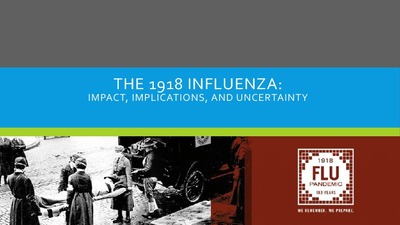
The 1918 Influenza: Impact, Implications and Uncertainty
Shelia Simons
One hundred years ago the “Spanish” influenza pandemic took an estimated 675,000 American lives. Ninety-nine percent of deaths occurred in people under 65; nearly half of those were between the ages of 20-40. It was the most severe pandemic in recent history, with global deaths exceeding 50 million people. With little understanding of the causation and risk factors associated with H1N1, public health was woefully unprepared. In total, four influenza pandemics have occurred: 1918, 1957, 1968, and 2009. Each pandemic has provided valuable lessons for public health. Developments since the 1918 pandemic have consisted of vaccines, anti-viral drugs, and the establishment of a global surveillance system by the World Health Organization. Other tools such as social distancing, good hand hygiene and cough etiquette assist in the slowing the spread of influenza. In the United States today, more than 200,000 individuals are hospitalized for flu-related complications. And over the past three decades there have been some 3,000-49,000 deaths each year. With the increase in growing populations, urbanization, and mega-cities, the opportunity for the spread of infection increases the likelihood of another influenza pandemic. Despite many uncertainties, the study of past pandemics may help public health develop future planning for timely responses. Comments A specialist in the field of epidemiology and human diseases, Dr. Simons’ research interest involves infectious diseases and their respective preventive methods, surveillance and distribution of disease. Dr. Simons serves as a Certified Reporter for EpiCore, a disease notification dissemination service associated with ProMED (Program for Monitoring Emerging Diseases). Dr. Simons is a Professor in the Department of Health Promotion where she is the graduate coordinator and teaches Principles of Epidemiology and Epidemiology in Public Health. Dr. Simons joined the Department of Health Promotion Faculty in August of 1992.
Printing is not supported at the primary Gallery Thumbnail page. Please first navigate to a specific Image before printing.